
Bead Blasting vs. Acid Washing: Which Your Pool Tile Needs
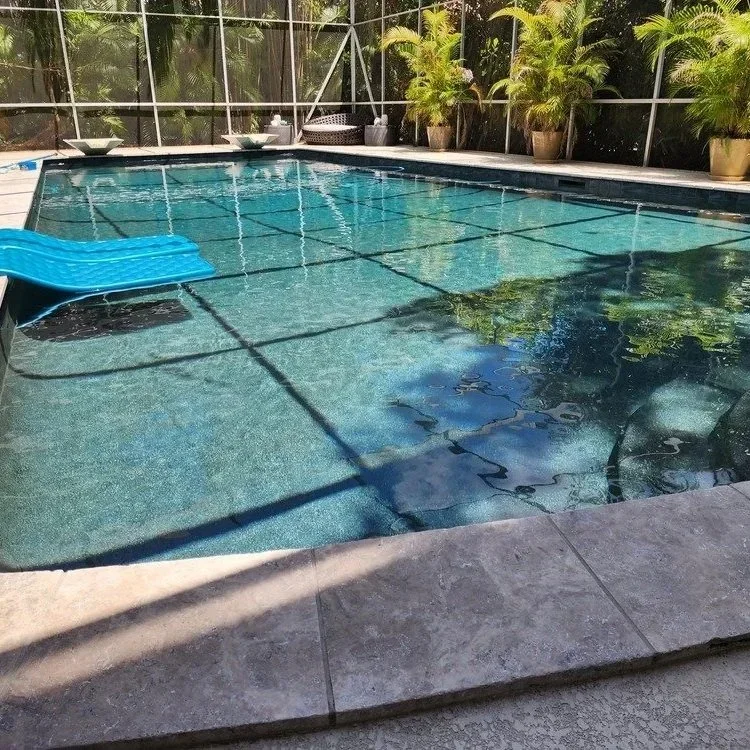
Quick Answer: They solve different problems. Bead (media) blasting fires a soft, water-soluble media at the tile to break hardened calcium and scale off the surface without scratching the glaze — it's the method for stubborn waterline buildup, including hard calcium silicate. Acid washing applies acid to etch away staining and surface buildup, and is most often used on bare plaster or Pebble Tec interiors to strip a thin layer and reveal fresh surface underneath. In short: media blasting cleans the tile; acid washing resurfaces the pool's plaster interior. Many pools end up needing both, for different surfaces.
Two names get thrown around when a pool needs serious cleaning — bead blasting and acid washing — and they're often talked about as if they're interchangeable. They aren't. They use different methods, target different problems, and are right for different surfaces. Picking the wrong one can mean a job that doesn't work or a finish that gets damaged, so it's worth understanding what each actually does.
What Bead Blasting Does
Bead blasting, often called media blasting, removes hardened deposits by firing a stream of fine media at the surface under pressure. The media chips the calcium scale and buildup off the tile mechanically, then breaks down — modern water-soluble media, like a salt or magnesium-based product, dissolves in the pool water rather than leaving grit behind. Because the media is softer than the tile glaze but harder than the calcium, it knocks the deposit loose without scratching the tile underneath.
This is the go-to for waterline calcium, including the hard calcium silicate that acid can't dissolve. It works on glass, ceramic, porcelain, and natural stone tile, and it clears an entire waterline evenly. The key advantage is that it's a surface-cleaning method for tile — it takes the crust off and leaves the tile intact.
What Acid Washing Does
Acid washing is a chemical process, and it's aimed mostly at the pool's interior plaster or Pebble Tec, not the decorative tile. The pool is drained, and a diluted acid solution is applied to the plaster to etch away stains, discoloration, algae, and a thin top layer of the surface. Removing that microscopic layer exposes clean, brighter plaster beneath, which is why an acid wash can make a dingy, stained interior look almost new.
The trade-off is built into the way it works: acid washing removes a little of the surface each time. Plaster has only so much thickness to give, so it can only be acid washed a limited number of times over the pool's life before the surface gets too thin. It's a periodic refresh for the interior, not a routine cleaning.
The Core Difference, Side by Side
| Factor | Bead/Media Blasting | Acid Washing |
|---|---|---|
| Method | Mechanical — media knocks deposits off | Chemical — acid etches the surface |
| Best for | Calcium and scale on tile | Stains and buildup on plaster/Pebble Tec |
| Surface | Tile (glass, ceramic, stone) | Interior plaster surfaces |
| Removes surface material? | No — leaves tile glaze intact | Yes — strips a thin layer each time |
| Handles hard calcium silicate? | Yes | No — acid doesn't dissolve it |
| Repeatable long-term? | Yes | Limited — thins plaster over time |
The cleanest way to keep them straight: media blasting cleans the tile by breaking deposits off the glaze, while acid washing renews the plaster interior by removing a thin layer of the surface itself. One is mechanical and surface-safe; the other is chemical and surface-consuming.
Why the Method Has to Match the Surface
The reason these two get confused is that both leave a pool looking dramatically better, so people assume they're swappable. They aren't, and using the wrong one is where trouble starts. Throw acid at a hard silicate crust on glass tile, and you'll get little result for the buildup while risking damage to the glaze and grout — the acid eats at everything except the deposit you wanted gone. Run a blaster across soft, stained plaster expecting it to brighten the interior, and you're using a tile tool on a surface that needs a chemical refresh, not a mechanical one.
Each method is built around the physical nature of its target. Calcium on tile is a hard mineral bonded to a hard, smooth glaze, so a mechanical method that chips the deposit off without scoring the glaze is exactly right. Plaster staining is discoloration soaked into a slightly porous surface, so a chemical method that dissolves a microscopic top layer and takes the stain with it is the fit. Match the method to what the surface and the problem are, and both work beautifully; mismatch them, and you get a disappointing clean or a damaged finish.
Which One Does Your Pool Need
If your problem is the chalky or hard white crust along the waterline tile, that's a media blasting job — especially if the deposit is hard, gray silicate that won't fizz with acid. If your problem is a stained, dull, or discolored plaster interior, that's where an acid wash earns its place. A pool with both a crusted waterline and a dingy interior may need media blasting for the tile and an acid wash for the plaster, since each tool fixes what the other can't.
Match the method to the surface, not the symptom. "It looks dirty" isn't enough — figure out whether the dirty part is the decorative tile (media blasting) or the plaster shell (acid washing), because using acid on heavy tile calcium usually disappoints.
Frequently Asked Questions
Yes, when done correctly with the right media. The media used in modern pool blasting is chosen to be softer than the tile glaze, so it breaks calcium loose without scratching glass, ceramic, porcelain, or stone. That's a major advantage over abrasive shortcuts like pumice stones, which do scratch. The technician adjusts the media and pressure to suit the tile.
Not well. Acid can dissolve softer calcium carbonate to some degree, but it does nothing for the hard calcium silicate that forms heavy waterline crust, and splashing acid onto tile risks damaging the glaze and grout. Acid washing is designed for plaster interiors, not for stripping calcium off decorative tile. For tile calcium, media blasting is the appropriate method.
Only a limited number of times over its life, because each acid wash removes a thin layer of the plaster surface. Doing it too often wears the plaster thin and shortens the life of the interior finish. It's best treated as an occasional refresh when the plaster is truly stained or dull — not a regular maintenance step.
No. The media is harder than the calcium deposit but softer than the tile glaze, so it knocks the buildup off without taking tile with it. That's the whole point of the method — it cleans the surface rather than consuming it, which is why it can be repeated as calcium returns over the years without damaging the tile.
That usually calls for both methods on their respective surfaces: media blasting to clear the calcium off the tile, and an acid wash to renew the stained plaster interior. They aren't competing options in that case — they're two different jobs for two different surfaces. A pro can assess both and recommend the right sequence.
Two Different Tools for Two Different Surfaces
Bead blasting and acid washing aren't rival ways to do the same job — they fix different things. Media blasting mechanically removes hardened calcium from your tile while leaving the glaze intact, handling even the hard silicate that acid can't touch. Acid washing chemically strips a thin layer from plaster to renew a stained interior, so it can only be done a limited number of times. Identify whether the trouble is on the tile or the plaster, and the right method picks itself.
Got hard calcium crust on your waterline tile? — Get it cleared with gentle media blasting that lifts the deposit without harming the tile. Pool Tile Cleaning Vegas serves Las Vegas, Henderson, North Las Vegas. Call (702) 743-8142.
