
Why Pool Calcium Comes Back So Fast in Las Vegas
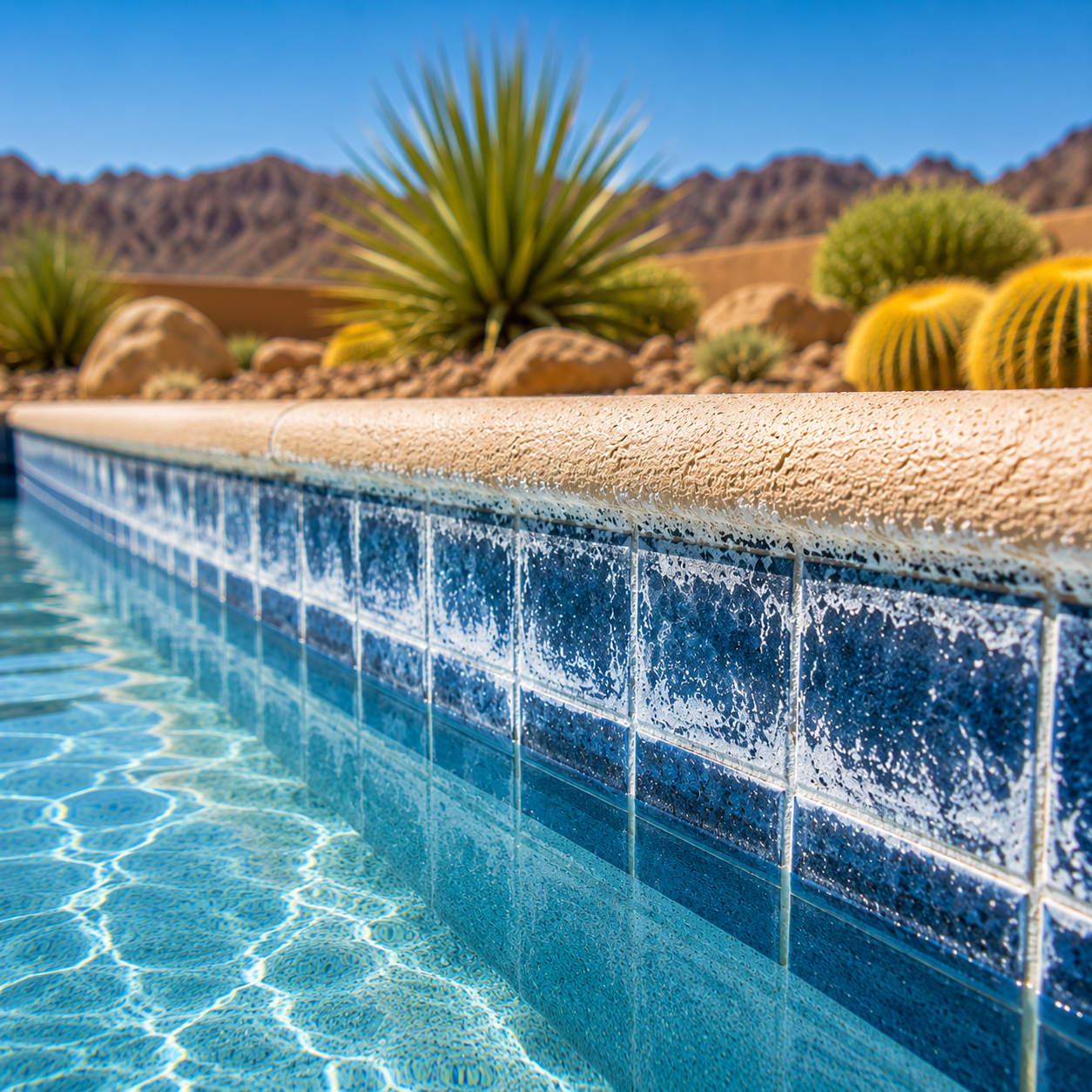
Quick Answer: Calcium comes back fast in the desert because two things stack: the source water is very hard, so it's loaded with calcium to begin with, and the intense sun and dry air evaporate pool water quickly. Every gallon that evaporates leaves its minerals behind, so the remaining water gets more and more calcium-saturated until it deposits on the tile. Refilling with the same hard water adds even more. You can slow it with balanced water chemistry, keeping the pool topped off, running features less in peak heat, and periodic professional cleaning — but in hard-water regions some return is normal.
You finally got the waterline clean — smooth tile, no chalky band — and within months, the white crust is creeping back. It's a familiar frustration for desert pool owners, and it isn't because the cleaning failed. It's because the conditions that create calcium buildup are unusually strong here, and they never really stop working.
The Two Forces Working Together
Calcium buildup results from two factors: hard water and evaporation. Either one alone is manageable. Together, in a hot, dry climate, they create a cycle that drives minerals onto your tile faster than in almost any other part of the country.
The source water is the first half. Desert tap water is among the hardest in the nation, meaning it arrives already carrying a heavy load of dissolved calcium and other minerals. Your pool is filled and topped off with that water, so it starts mineral-rich and stays that way.
The second half is evaporation. When water evaporates, only pure water leaves as vapor — every mineral it was carrying stays behind in the pool. The hotter and drier the air, the faster water evaporates, and a desert summer evaporates a remarkable amount of pool water. As the water level drops and you add more hard water to refill, the calcium concentration climbs higher and higher, because you keep adding minerals while only losing water.
How the Cycle Concentrates Minerals
Picture a glass of salt water left on a sunny windowsill. As it evaporates, the water gets saltier and saltier until salt crystals form on the glass. Your pool does the same thing with calcium. Once the water can't hold any more dissolved minerals, the calcium drops out of solution and bonds to the nearest surface — and the waterline tile, wet-and-dried all day by splashing and evaporation, is exactly where it lands.
Heat speeds every part of this up. Warmer water holds dissolved minerals differently and encourages them to deposit, and the relentless sun keeps evaporation running from spring well into fall. That's why the crust that took a full year to form in a mild climate can reappear in a single hot season here.
| What's happening | Effect on calcium |
|---|---|
| Very hard source water | Pool starts loaded with calcium |
| Fast evaporation in heat | Water leaves, minerals stay and concentrate |
| Topping off with hard water | Adds more calcium without diluting |
| High water temperature | Encourages minerals to deposit on surfaces |
| Splashing at the waterline | Wets and dries tile, layering deposits |
What Actually Slows It Down
You can't change the source water or the desert sun, but you can take the edge off the cycle. Keeping your water chemistry balanced — calcium hardness, pH, and alkalinity within range — keeps minerals dissolved longer, rather than dropping onto the tile. Keeping the pool topped off so the level doesn't swing low prevents the calcium from over-concentrating during heat waves. Running spillways, water features, and fountains less during peak heat cuts evaporation, since moving and airborne water evaporates fastest.
Watch your pool's fill level in summer. Letting it drop and then refilling with hard water repeatedly is one of the fastest ways to spike calcium — steady top-offs beat big refills after the level has crashed.
Even with all of that, in a region this hard and this hot, some calcium will return — it's the nature of the water. The realistic goal isn't to stop it forever but to slow it down and have the tile professionally cleaned periodically before the buildup turns into a hard, stubborn crust that's far tougher to remove.
Why a Smooth Start Matters
There's one more factor that decides how fast calcium comes back: the condition of the tile when you start. Minerals deposit far more readily on a rough, pitted surface than on a smooth one, because roughness gives them ledges and pores to anchor in. A tile that still carries the remnants of old, scratched, or partially removed calcium is essentially pre-seeded for the next round — the new buildup grabs hold quickly and grows fast.
This is exactly why a pumice-stone DIY job tends to backfire. It might clear the visible crust, but it leaves the glaze scratched, and those scratches become anchor points that pull calcium back faster than before. A proper cleaning that removes the deposit and leaves the glaze smooth does the opposite: it resets the surface so that new minerals have less to cling to, buying you more time before the band returns. The smoother you keep the tile, the slower the cycle turns.
Think in Seasons, Not One-Time Fixes
Because the desert never stops feeding the cycle, the owners who stay ahead of calcium treat tile cleaning as seasonal upkeep rather than a one-and-done event. Catching the buildup while it's still thin carbonate means it comes off easily and the tile stays smooth; letting it run for years lets it thicken and harden, sometimes into stubborn silicate that takes much more work to remove. A modest, regular cleaning rhythm — timed to your pool's pace of return — almost always beats waiting until the waterline is a solid white collar. You're not fighting the water; you're just not letting it win by accumulation.
Frequently Asked Questions
Not necessarily. In a hard-water desert, calcium returns quickly even with well-balanced water, simply because the source water is mineral-rich and evaporation is heavy. Even so, chemistry that's out of range — especially high calcium hardness or high pH — will speed deposits up. Keeping levels balanced slows the return; it just won't stop it entirely here.
It can. Fountains, spillways, and other features increase evaporation because they expose more water to the dry air and break it into droplets that evaporate fast. More evaporation means minerals concentrate quicker, which feeds calcium buildup. Running features less during peak summer heat is one practical way to slow it down.
A fresh fill lowers the concentration of dissolved minerals in the water, which helps reset things — but the refill water is still hard, so the cycle starts again. Draining and refilling periodically is part of desert pool care, but it doesn't remove calcium already bonded to the tile. That existing crust still has to be cleaned off the surface.
In a hot desert season, a visible waterline band can reappear within months of a cleaning, where the same buildup might take a year or more in a mild, soft-water climate. The exact pace depends on your water hardness, chemistry, evaporation, and how much the pool runs. Faster return is normal here and isn't a sign the cleaning was done poorly.
It helps a lot, but it usually isn't enough on its own in hard-water country. Good chemistry keeps minerals dissolved longer and slows new deposits, yet the combination of very hard water and intense evaporation still drives some calcium onto the tile over time. Most owners pair good chemistry with periodic professional cleaning rather than relying on chemistry alone.
You Can Slow the Cycle, Not Stop the Water
Calcium comes back fast in the desert because hard source water and heavy evaporation feed each other — minerals pour in, water boils off, and what's left keeps getting more saturated until it crusts onto the tile. Balanced chemistry, steady fill levels, and running features less all take the edge off, but in a region this hard and this hot, some return is simply built into the water. The smart play is slowing the buildup and cleaning the tile periodically before it hardens into the kind of crust that takes real work to remove.
Calcium creeping back onto your waterline again? — Get it cleared with gentle media blasting and stay ahead of the buildup with periodic cleaning. Pool Tile Cleaning Vegas serves Las Vegas, Henderson, North Las Vegas. Call (702) 743-8142.
