
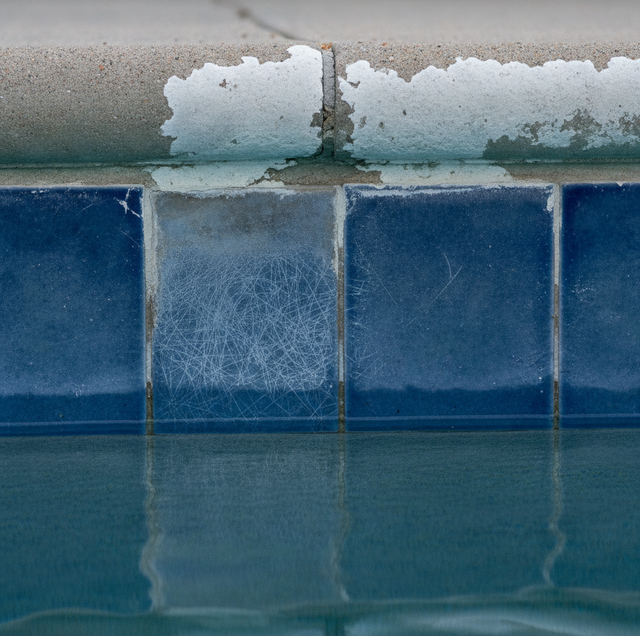
The hardware-store advice is almost always the same: grab a pumice stone, scrub the crusty white band at your waterline, and the calcium comes off. Some of it does. What that advice leaves out is what the stone is doing to the tile underneath while you scrub, and why the buildup tends to come back faster and stickier than before. Once you understand what a pumice stone actually is and how pool scale is built, the reason to keep it away from most tile becomes obvious.
What a Pumice Stone Really Is
A pumice stone is a piece of hardened volcanic rock, full of tiny air pockets, and it is highly abrasive. That is the whole point of it. It works by wearing away whatever it is dragged across, which is fine on a callused heel or a stained toilet bowl. On pool tile, it is a grinding tool, and the surface it grinds most easily is the one you least want to damage.
Most pool waterline tile is either glazed ceramic or glass. Both have a smooth, glass-hard finish that gives them their shine and, more importantly, keeps them slick enough that scale and grime have trouble bonding. That finish is thin. A pumice stone is harder than the glaze, so every pass leaves a field of fine scratches, and once the glaze is dulled or worn through, it does not grow back. You end up trading a cleanable calcium band for permanent haze, and no amount of scrubbing brings the gloss back.
Why the Scratches Make the Problem Worse
The damage is not just cosmetic. Scale and mineral film cling to rough surfaces far more readily than smooth ones. When a pumice stone leaves microscopic scratches across the glaze, it turns a slick tile into a textured one, and every one of those grooves gives calcium, dirt, and body oils a place to lodge.
So the tile that took months to build up its first visible band starts scaling again in weeks, and the new deposits sit deeper in the scratches where a soft cloth or brush cannot reach them. The next round of scrubbing cuts deeper still. Each cleaning makes the next one harder, which is the opposite of what you were trying to do. A tile that has been pumiced repeatedly often looks perpetually cloudy even right after a cleaning, because light scatters off the roughened surface instead of reflecting cleanly.
The Scale You Are Fighting Is Not All the Same
There is a reason the pumice stone seems to half-work on some pools and do almost nothing on others. Pool scale comes in two forms, and they behave completely differently.
The soft, chalky, grayish-white buildup is usually calcium carbonate. It is relatively soft, and it reacts with acid, so a mild acid or even repeated scrubbing can chip away at it. The harder deposit is calcium silicate, which shows up as a dense, gray, glass-like crust that often has a slightly translucent look. Silicate does not dissolve in vinegar or mild acid the way carbonate does, and a pumice stone barely touches it. You can scrub silicate scale until your arm gives out and lift a fraction of it while grinding the glaze the whole time. That mismatch is exactly why hard, established scale defeats hand tools.
Why Acid Is Not the Safe Alternative Either
The common fallback when scrubbing fails is diluted muriatic acid, and it does dissolve calcium carbonate. But acid brings its own risks that are easy to underestimate. Left on too long or mixed too strongly, acid etches the tile surface, leaving a dulled, pitted finish that mimics the exact haze a pumice stone creates. It also attacks grout and any surrounding stone or plaster, lightening colored grout lines, and eats away at the joints that hold the tile in place. And on calcium silicate, acid is largely wasted effort, since silicate shrugs off the mild acids a homeowner can safely handle. So the two most common DIY tools each fail on the harder scale, risking permanent damage to the tile.
Know Your Tile Before You Touch It
The single most useful habit is identifying your tile before reaching for any tool. Glass tile is unmistakable once you look: it is translucent, you can often see a hint of color depth through it, and it is among the easiest surfaces to scratch. Glazed ceramic has a hard, shiny, colored coating that stops at the edges, so a chipped tile shows a different-colored body underneath. Both should never meet a pumice stone.
The narrow exception is unglazed, very hard tile, such as unglazed porcelain, which has no delicate coating to protect. On that surface, pumice stone, used wet, can remove light scale without ruining the finish, though it is slow, tiring work, and still does little against silicate. If you are not certain which type you have, treat it as scratchable and do not test the theory on the visible waterline.
What Actually Removes It Without Gouging
The reason professionals reach for media blasting instead of stones or acid is that blasting solves the hardness problem from the other direction. Rather than dragging a hard abrasive across the tile, a blaster propels a soft, fine media, often a water-soluble or glass-bead type, at low pressure. The media is chosen to be harder than the calcium scale but softer than the glaze it lands on, so it fractures the deposit and leaves the tile finish intact.
That is what lets blasting strip a heavy silicate crust that would defeat both a pumice stone and household acid, without scratching glass or glazed ceramic underneath. Because it works by knocking the deposit off rather than grinding it, it does not leave the fine scratch pattern that causes scale to return faster. Wet or water-soluble media also rinse away cleanly and keep dust down. It is the removal method built for exactly the mineral-heavy water that plagues pools in hard-water areas, where scale rebuilds every few years, no matter how careful the maintenance.
Choosing the Right Approach for Your Pool
If the buildup is a light film or a fresh, soft carbonate haze, gentle methods handle it, and there is no reason to grind the tile. If it is a hard, gray, established crust, no hand tool is going to remove it cleanly, and the effort spent trying tends to leave lasting marks on the very surface you want to keep looking good. Matching the method to the scale and to the tile is what protects the finish for the long run rather than trading one problem for a worse one.
Frequently Asked Questions
You can run a quick test to determine the overall approach. Put on gloves and eye protection, then dab a little household white vinegar, or a properly diluted acid, on a hidden bit of the buildup. Soft calcium carbonate fizzes and softens; hard calcium silicate does essentially nothing, sitting there dense and glassy. Carbonate is the chalky, dull grayish-white band many pools grow, while silicate is the harder, slightly translucent gray crust that shrugs off everything a homeowner can safely use. Knowing which you have explains why a pumice stone seemed to work on a friend's pool and does nothing on yours, and it's the difference between a light touch-up and a job that needs professional blasting.
Wetting the stone reduces friction and drag, which is why every source that mentions pumice insists on using it wet, but it does not change what the stone is. Pumice is still an abrasive volcanic rock and is still harder than glazed and glass finishes, so a wet stone will still leave fine scratches on those surfaces. Wet use lowers the risk of unglazed porcelain; it does not make pumice safe on the tile most pools actually have.
Better not. A pumice stone scuffs more than glazed tile. Dragged across pool plaster or a pebble finish, it leaves a rough, dull patch that then collects scale and stains faster, the same trap it sets on tile, and the roughened plaster feels abrasive underfoot. On grout lines, it wears the grout down and can open the joints, which invites water behind the tile over time. There's no surface at the waterline where grinding with pumice is the safe default, because the finishes down there are chosen to be smooth precisely so scale can't grip, and pumice destroys exactly that smoothness. Match the removal method to the deposit rather than hoping a stone is gentler on one material than another.
Honestly, not back to the original. A glaze or glass finish that's been ground dull can't be re-glazed in place, because the shine came from a coating fired on at the factory, and once it's worn through, there's nothing left to restore it to. A pro can sometimes improve the look by professionally polishing glass tile, but that's limited and won't rebuild a ceramic glaze. In practice, badly scratched waterline tile that's turned into a permanent scale magnet is usually addressed by replacing that band of tile rather than resurfacing it. The real lesson is preventive: the reason to keep pumice off in the first place is that this scratching is one of the few pool-tile problems with no clean undo.
No on both counts, done right. Waterline scale is blasted with the pool full to just below the tile band, so the work happens in the few inches above the water, and the plaster below the line is never touched. The technician contains the spent media and the knocked-off scale instead of letting it settle across the pool floor, and the soft media used is chosen so it clears the calcium without cutting the plaster or the tile's glaze, even if it strays low. So it isn't the drain-and-acid-wash ordeal people sometimes picture; it's a contained process aimed only at the scale band, which is a big part of why it's gentler on the pool as a whole than a homeowner grinding away at the tile by hand.
They are safe, but only useful for the lightest jobs. A melamine foam pad or a vinegar solution can lift fresh mineral film and soft surface haze without harming the glaze, so they are fine for routine touch-ups. Neither one does anything meaningful against a hardened calcium band, and vinegar in particular is useless on calcium silicate, which does not dissolve in mild acid at all. For anything past a light film, they simply are not strong enough.
Skip the pumice stone and protect your tile — get established calcium and silicate scale blasted off without scratching the glaze. Pool Tile Cleaning Vegas serves Las Vegas, Henderson, and North Las Vegas. Call (702) 743-8142.
