
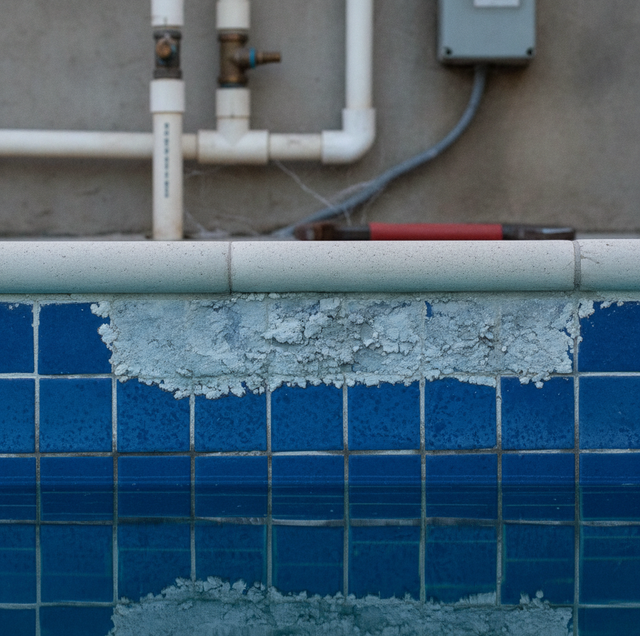
The white band creeping along your waterline looks like one problem, but it is usually one of two very different minerals, and they behave nothing alike. One softens and can often be dislodged. The other laughs at everything you throw at it, including the acid people reach for first. Treating both the same way is how homeowners spend a weekend scrubbing, get nowhere, and etch their tile in the process. Before you pick a method, it is worth learning which deposit you are actually looking at, because the wrong approach on the wrong scale does real damage.
Quick Answer: Calcium carbonate is the softer, flaky, chalky-white scale that fizzes when acid touches it. Calcium silicate is the harder, denser, grayish deposit that does not react to acid at all and usually needs professional bead blasting. A drop of muriatic acid on a hidden spot tells you which one you have in seconds.
Two Deposits That Look Almost Identical
Stand a few feet back, and both types read as the same thing: a chalky white crust riding the waterline where the pool water meets the tile. That resemblance is exactly why so much scrubbing effort gets wasted. The two minerals form through related but distinct processes, and their physical makeup is different enough that no single removal method works on both.
Calcium carbonate is the common one, the deposit most pool owners are dealing with. It forms when the calcium already dissolved in the water climbs high, the pH and total alkalinity drift up, and the minerals fall out of solution onto the nearest surface. The result is a grayish-white deposit that often looks flaky or crusty, sometimes almost like dried plaster. It builds relatively quickly once the water chemistry tips out of range.
Calcium silicate is the tougher cousin. It forms more slowly, usually over years rather than months, and it tends to show up on older pools or where high pH and dissolved silica sit in the water for a long stretch. Instead of the loose, chalky look of carbonate, silicate reads as denser and harder, grayish-white and sometimes slightly translucent, packed tight against the tile as it grew there. That density is the whole problem, because it makes silicate far harder to remove and completely resistant to the acid trick that handles carbonate.
The One Test That Settles It
You do not have to guess. The two minerals respond to acid in opposite ways, and that single difference is the fastest home diagnostic test there is. Carbonate reacts with acid and fizzes. Silicate does not react at all.
Here is the test. Put on chemical gloves and eye protection first, because you are handling acid even in a small amount. Find a hidden spot on the scale, somewhere low or behind a return line, where a small mark will not show. Dab on a little muriatic acid, or even strong white vinegar if you just want a hint of the reaction. Watch what happens. If the deposit bubbles, fizzes, and starts to soften, you are looking at calcium carbonate. If it barely responds and just sits there, you have calcium silicate.
Think of it like dropping vinegar on two white powders on a counter: baking soda erupts into foam, while chalk dust from a hard stone barely stirs. The reaction, or the lack of one, tells you which mineral you are dealing with faster than any lab could.
Do the test in a ventilated spot, keep the acid away from your skin and eyes, and never mix it with any other pool chemical. Muriatic acid combined with chlorine products releases dangerous gas, so the bottle you test with should be the only chemical anywhere near the tile.
Why Silicate Shrugs Off Acid
The reason comes down to chemistry, not effort. Calcium carbonate and calcium silicate are built differently at the molecular level. Carbonate readily reacts with acid, which breaks it apart and lets it release as gas and dissolved material, the fizzing you see in the test. Silicate has no such reaction. Acid simply cannot dissolve it.
That distinction matters more than it sounds, because it changes what happens when you scrub. On carbonate, acid is doing chemical work, loosening the deposit as you go. On silicate, the acid does nothing to the scale but everything to the tile. You end up dragging an abrasive across a glazed or glass surface with an acid that is only there to etch it. The scale stays put, the glaze dulls, and now the roughened tile collects new buildup faster than before. Knowing which mineral you have is the difference between a method that works and one that quietly wrecks the surface you were trying to clean.
Carbonate vs. Silicate at a Glance
| Feature | Calcium Carbonate | Calcium Silicate |
|---|---|---|
| Look | Grayish-white, flaky or chalky, crusty | Grayish-white to slightly translucent, dense, hard |
| Hardness | Softer, dislodges more easily | Much harder, packed tight to the tile |
| Acid test | Fizzes and softens | No reaction |
| How it forms | Builds relatively fast with high calcium and high pH/alkalinity | Builds slowly over the years, high pH plus dissolved silica |
| Removal | Sometimes responds to acid or gentler methods | Generally needs professional bead or media blasting |
How Each One Actually Comes Off
Because carbonate is softer and reacts to acid, it is the more forgiving deposit. A thin, fresh carbonate band can sometimes respond to careful methods that work the scale loose without grinding on the tile. It is still worth being cautious, since acid on glazed or glass tile can etch even when it is dissolving carbonate, but at least the chemistry is on your side.
Silicate is a different job entirely. Nothing you dab or scrub dissolves it, so the standard professional fix is media or bead blasting, which fires a soft, water-soluble media at the scale under controlled pressure. Done right, it strips the hardened deposit off without scratching the glaze on ceramic tile or the surface of glass tile. That control is the point. The blast removes the mineral and leaves the finish intact, which is the opposite of what a pumice stone or an acid scrub does to the same tile.
This is also why the pumice stone shortcut backfires on silicate. Acid will not touch it, and a pumice stone hard enough to abrade it also scratches the tile, and scratched tile scales faster afterward. The buildup you fought comes back quicker and lodges deeper, which is the reverse of progress.
Why Hard-Water Pools See So Much of This
Local water conditions push both minerals along. Very hard water carries a heavy mineral load before it ever reaches your pool. High evaporation then concentrates those minerals further: as water leaves the pool, the calcium and silica stay behind, and the remaining water becomes more saturated. Add the high pH that pool water tends to drift toward in intense heat, and you have the exact conditions that drop minerals out of solution and onto the tile.
That combination means carbonate builds readily here, and given enough time and neglected chemistry, some of that mineral load hardens into the silicate that no home method removes. The longer the scale sits and the more the chemistry stays out of range, the more likely the easy deposit becomes the hard one. Catching buildup while it is still soft carbonate is far easier than waiting until it has set into silicate.
Frequently Asked Questions
The acid-drop test is the quickest, but a second check makes it more reliable. Besides watching for fizz when acid touches a hidden spot, run a hardness or scratch check with a plastic scraper. Silicate is harder and glassier and resists a plastic edge, while carbonate is chalkier and flakes away under light pressure. The two checks together confirm the mineral more surely than either one alone. Wear gloves and eye protection, work in a ventilated spot, and keep the acid away from every other chemical.
It comes down to what each mineral is made of. Calcium carbonate is a base, so it neutralizes acid and releases carbon dioxide, and that gas is the fizz you see. Silica, the core of calcium silicate, is chemically inert to muriatic acid, so nothing dissolves and no reaction happens at all. Only abrasive blasting removes it, which is why acid on silicate just etches the tile while the deposit stays put. The two minerals need opposite treatments for that reason.
Carbonate can appear within a single season when calcium hardness and pH both run high, dropping minerals onto the tile in months rather than years. Silicate builds far more slowly, usually over years, and it shows up most on older plaster or pebble surfaces where silica has leached out of the finish itself. So a pool with drifting chemistry tends toward carbonate first, and an older interior with a long history of high pH is where the harder silicate takes hold. Catching the soft carbonate early keeps it from ever reaching that stage.
No. Acid does not react with silicate, so it will not budge the deposit, and a pumice stone hard enough to grind at it also scratches glazed and glass tile. A scratched tile is worse than useless here, because the rough surface it leaves collects new scale faster and holds it deeper than a smooth tile does. Silicate is a professional job that calls for controlled bead or media blasting, which lifts the hardened scale off without scoring the finish.
Keep the water chemistry in range: calcium hardness, pH, and total alkalinity all sitting where they belong rather than drifting high. During peak evaporation, running the waterline a little lower reduces the exact zone where scale rings the tile. Brushing the tile line regularly knocks off the earliest film before it can harden and bond. None of these stops builds up entirely in hard water, but together they slow it enough that cleanings stay simple instead of turning into blasting jobs.
In very hard water, some return is inevitable, no matter what you do, because the minerals are in the water itself. What you control is the pace. Balanced chemistry and periodic cleaning keep the new scale as a soft, manageable carbonate that comes off with little trouble. Let it sit and let the chemistry run high, and that same buildup has time to harden into silicate, which is the version that stops responding to anything short of professional blasting.
Book a tile inspection — get the right removal method for your scale instead of guessing. Pool Tile Cleaning Vegas serves Las Vegas, Henderson, and North Las Vegas. Call (702) 743-8142.
