
Pool Calcium: Can You Remove It Yourself or Need a Pro?
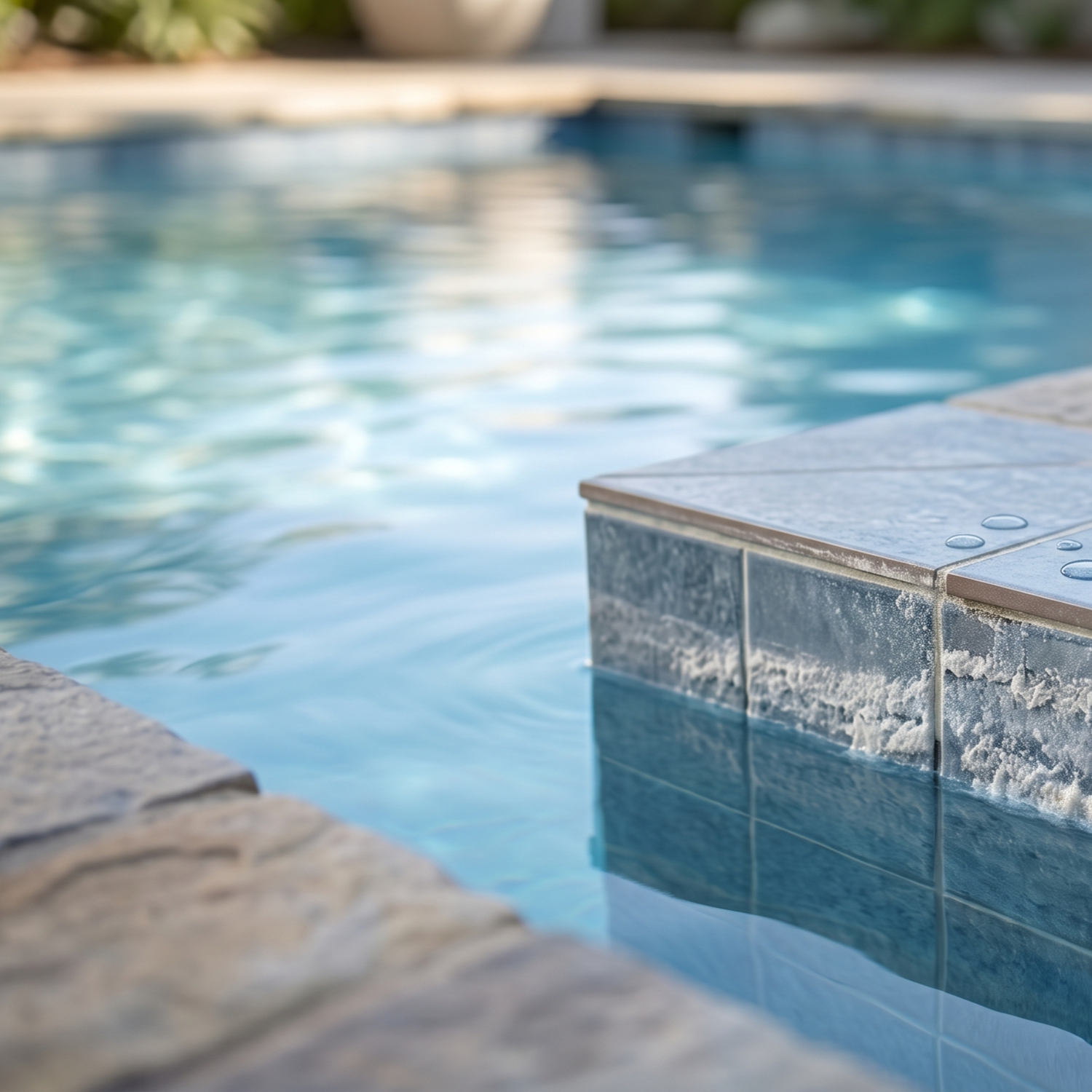
Quick Answer: Light, fresh calcium carbonate on durable tile can sometimes be a DIY job using a calcium scale remover and a non-scratch pad. But anything heavy, hardened, or on delicate tile — and any calcium silicate, which resists acid — is where DIY tends to scratch the tile or simply fail. The biggest DIY risk is reaching for a pumice stone or harsh acid, which damages the glaze permanently. If the buildup is thick, gray and hard, spread across a lot of tile, or on glass or natural stone, professional media blasting removes it safely without scratching.
You've watched a dozen videos, bought the spray, and spent a Saturday on your knees at the edge of the pool — and the white crust is still there, plus your arm is sore, and you're eyeing a pumice stone you know you shouldn't use. The honest answer to whether you can do this yourself is: sometimes. It depends on what kind of calcium you have, how much, and what your tile can take.
What You're Really Up Against
Pool calcium isn't grime sitting on the tile — it's a mineral deposit bonded to the surface, and how hard it is to remove depends on its type. Calcium carbonate is the softer, chalky-white kind, and it reacts with acid. Calcium silicate is the dense, grayish, much harder kind that mostly ignores acid. Before you decide DIY or pro, you have to know which one you're fighting, because that single fact changes everything about whether a weekend effort has any chance.
A quick field test: drip a little pool-grade acid or even vinegar on a spot. If it fizzes, you've likely got carbonate, which is the more DIY-friendly of the two. If it barely reacts and the deposit is hard and gray, it's silicate, and that's pro territory.
When DIY Has a Real Chance
A do-it-yourself approach can work when the conditions are forgiving: the buildup is light and recent, it's carbonate (it fizzes), and your tile is durable porcelain or ceramic rather than delicate glass or natural stone. In that case, a dedicated calcium scale remover worked with a plastic or nylon non-scratch pad can lift a thin band without harming the glaze. Patience and the right product matter more than muscle.
If you try DIY, test any product and pad on one small, hidden spot first and check it in good light for scratching or dulling before you work the whole waterline. Two minutes of testing can save you from etching the entire pool.
When You Need a Pro
The job tips toward a professional the moment any of these is true: the buildup is thick or has been there for years, it's silicate (hard, gray, won't fizz), it covers a large stretch of tile, or your tile is glass, stone, or Pebble Tec that scratches easily. These are the situations where DIY either fails outright or causes damage that costs far more than the cleaning would have.
| Situation | DIY or Pro | Why |
|---|---|---|
| Light, fresh carbonate on porcelain | DIY possible | Soft scale, durable tile, low risk |
| Thick or years-old buildup | Pro | Too bonded for hand removal |
| Calcium silicate (hard, gray) | Pro | Resists acid; needs media blasting |
| Glass or natural stone tile | Pro | Scratches easily; high damage risk |
| Buildup across the whole waterline | Pro | Hours of work; uneven results by hand |
Professionals remove calcium with media blasting — firing a soft, water-soluble media at the deposit to break it loose while leaving the tile glaze intact. It handles both carbonate and silicate, works on delicate surfaces, and clears an entire waterline evenly in a fraction of the time a hand job would take.
There's also a consistency advantage that's easy to underestimate. Hand removal almost always produces uneven results — you clean hardest where you can reach comfortably and give up on the awkward corners, so the waterline ends up patchy. A pro works the entire band at the same intensity, so the tile comes out uniformly clean rather than clean in the easy spots and crusty in the hard ones. On a pool, that evenness is what reads as "professionally done" versus "scrubbed at."
Weigh the Hidden Costs of DIY
The appeal of doing it yourself is obvious, but the real comparison isn't effort versus money — it's effort plus risk versus money. A failed DIY attempt usually means you've spent a weekend and the cost of products, and still have to call someone. A damaging DIY attempt is worse: a scratched or etched glass tile can't be polished back, so the only fixes are living with the haze or replacing the tile, both of which dwarf what a cleaning would have cost. And because scratches give calcium more grip, a botched job often comes back faster and uglier.
So the honest way to decide is to be realistic about your tile and your patience. If the buildup is light and fresh, the tile is tough, and you'll actually stop and call for help the moment a product isn't working, DIY is a fair gamble. If you suspect you'll get frustrated and reach for the pumice stone, or if your tile is the delicate, expensive kind, the math favors letting a pro handle it from the start.
The DIY Mistake That Wrecks Tile
The single most common — and most expensive — DIY error is reaching for a pumice stone or an aggressive acid when the spray doesn't work fast enough. A pumice stone is harder than most tile glaze, so it grinds the calcium off and scratches the tile along with it. Glass tile is especially unforgiving. Worse, the fresh scratches give new calcium more surface to grip, so the buildup comes back faster and rougher than before. Frustration is what pushes people from "cleaning" to "damaging," and it's usually the point to stop and call someone.
Frequently Asked Questions
A dedicated calcium scale remover designed for pool tile, used with a non-scratch nylon or plastic pad, is the safest DIY route. Avoid pumice stones and undiluted harsh acids, which damage the glaze. Always test on a hidden spot first, and stop if you see any scratching or dulling. If the product isn't lifting the deposit with reasonable effort, that's a sign the buildup is beyond DIY.
Do the acid spot test. If the deposit fizzes, it's carbonate and may be DIY-friendly when light. If it barely reacts and is hard and gray, it's calcium silicate, which resists acid and needs professional media blasting. Thickness matters too — a chalky film is more workable than a crust you can catch a fingernail under.
It's risky as a DIY tile treatment. Strong acids can damage tile, grout, and surrounding surfaces, are hazardous to handle, and don't work well on silicate buildup anyway. Pros use controlled methods and protective steps that aren't practical for most homeowners. For tile, gentle media blasting is generally safer and more effective than splashing acid at the waterline.
For a light, fresh band of carbonate on durable tile, DIY may be enough. But if the buildup keeps returning, is hard to identify, or sits on delicate tile, a professional cleaning gets it done right without risking damage. Many owners also find that one even, thorough professional clean beats several frustrating partial DIY attempts.
The pool structure isn't usually at risk, but your tile finish is. Using the wrong tool — especially pumice or harsh acid — can permanently scratch or etch glass and glazed tile, and that damage isn't reversible. If your tile is glass, natural stone, or Pebble Tec, the safe move is professional removal designed not to harm those surfaces.
Match the Method to the Buildup and the Tile
DIY calcium removal is realistic only in the easy case: light, fresh carbonate on tough tile, worked gently with the right product. The moment the buildup is hard, gray, thick, widespread, or sitting on glass or stone, hand removal either fails or scratches — and the pumice-stone shortcut is what ruins tile for good. When you're past the easy case, media blasting clears it safely and evenly. Knowing which situation you're in saves both your tile and your Saturday.
Not sure your tile can survive a DIY scrub? — Get a safe, even calcium removal with gentle media blasting that protects the tile. Pool Tile Cleaning Vegas serves Las Vegas, Henderson, North Las Vegas. Call (702) 743-8142.
